Top Features Every Real Estate App Must Have by 2027
16 April 2026
Let’s be honest for a second. How many of us have downloaded a real estate app, swiped through a few glossy photos, and then… just deleted it? You get a vague sense of what’s on the market, but you’re left feeling like you’ve just window-shopped with a blindfold on. The information is generic, the process is clunky, and that dream of finding the one feels more distant than ever.
That’s because the game is changing. Fast. By 2027, the real estate app that thrives won’t just be a digital listing sheet. It will be your hyper-intelligent advisor, your virtual co-pilot, and your immersive portal into a future home. It will need to move from being a tool to being a trusted partner. So, what separates the forgettable from the future-proof? Buckle up. We’re diving into the non-negotiable features that will define the next generation of real estate apps.

Beyond the Listing: The Shift from Static to Dynamic
Think of the current crop of top apps as brilliant librarians. They have an incredible, categorized catalog (the listings) and can show it to you in various ways (map view, gallery view). But what if you need more than the catalog? What if you need a librarian who knows the story behind every book, can predict which one you’ll love based on your past reads, and can even let you step into the story before you check it out?That’s the leap we’re talking about. The foundational features—clean search, high-res photos, saved favorites—are now table stakes. They’re the flour in the cake. By 2027, the apps that wow us will be defined by the secret ingredients: AI-Powered Hyper-Personalization, Immersive & Authentic Visualization, and Integrated Lifecycle Management.
Let’s break down exactly what that looks like.
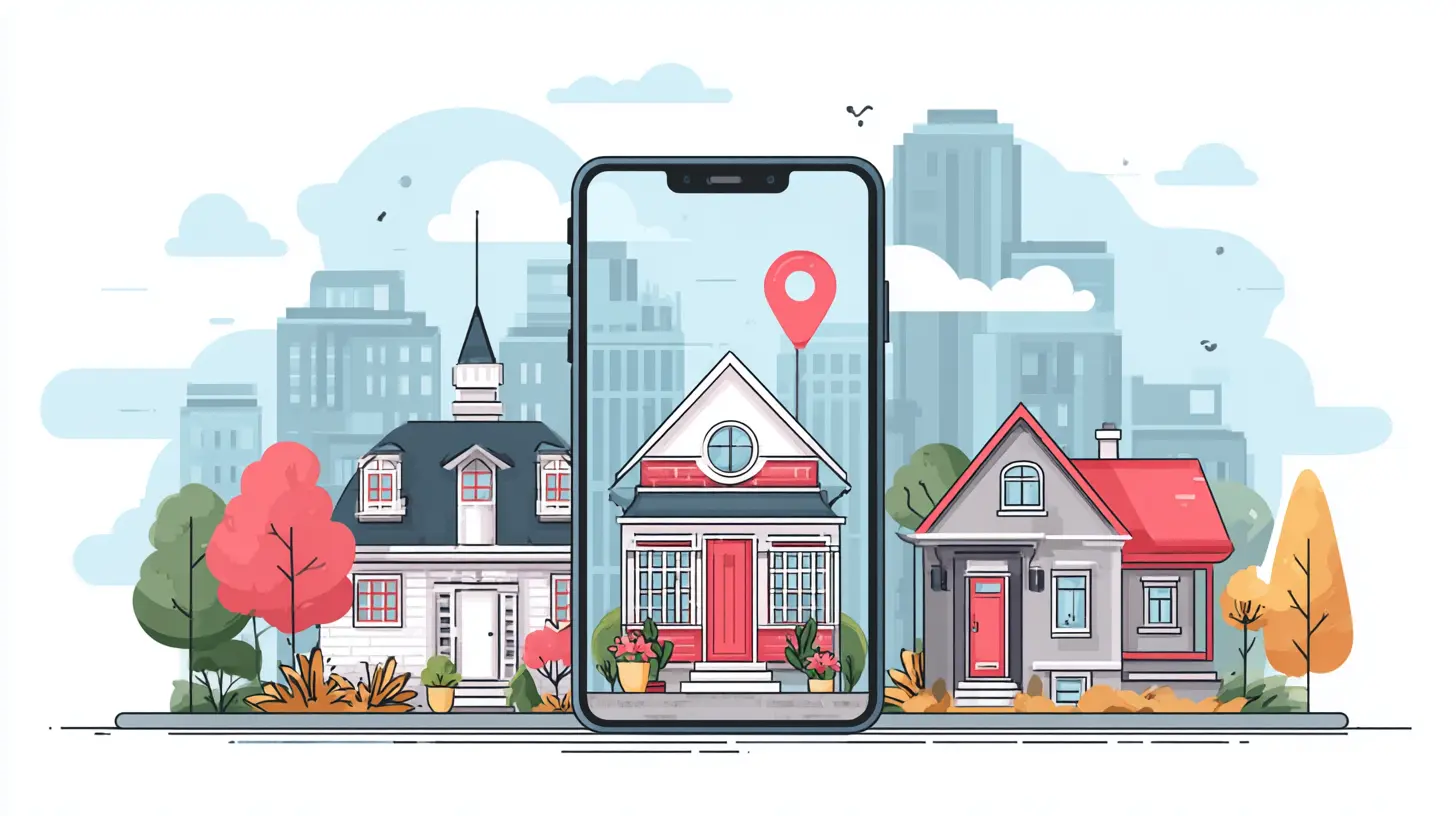
1. The AI Concierge: Hyper-Personalization That Reads Your Mind (Almost)
Forget typing in your price range and bedroom count for the thousandth time. The future app learns, adapts, and anticipates. Predictive “For You” Feeds: This goes beyond “similar listings.” Using machine learning, the app will analyze your behavior. You lingered on that photo of the chef’s kitchen for 45 seconds? You always skip past homes without a porch? You’ve toured three homes in that one specific school zone? The app quietly notes these patterns and prioritizes listings that match your unspoken* preferences, surfacing gems you might have filtered out with a too-strict search.
Neighborhood DNA Profiling: You can see crime stats and school ratings anywhere. The 2027 app will give you the vibe*. It will synthesize data from local business reviews, social media geotags, community forum sentiment, and event calendars to generate a dynamic “Neighborhood Personality” report. Is it “Young Family Friendly with Saturday Farmer’s Markets” or “Urban Professional & Nightlife Central”? This feature tells you not just about the house, but about the life you could live there.
* Voice & Conversational Search: “Hey app, find me a fixer-upper with good bones in an up-and-coming area, close to a dog park.” Natural language processing will understand complex, nuanced queries like this, making the search feel less like filling out a tax form and more like talking to a savvy friend in the industry.
2. Walking Through Walls: The Immersive Tech Revolution
Photos can lie. Even 3D tours can feel sterile, like a museum exhibit. The next wave is about authenticity and immersion—letting you feel the space before you step foot in it. True Photorealistic VR & AR Tours: We’re not talking about clunky cardboard viewers. With advancements in lightweight VR headsets and even AR via your phone or glasses, you’ll be able to take a true walk-through from your couch. But the key will be photorealism*—accurate lighting, true-to-life textures, and spatial audio that lets you hear the echo of the hallway. This is for serious, pre-qualified buyers to do meaningful shortlisting.
“Day in the Life” Simulations: This is the killer app. Using VR/AR, you won’t just tour an empty house. You’ll be able to activate different scenarios: “Saturday Morning” (sunlight floods the living room, you hear simulated neighborhood sounds), “Evening Entertaining” (the dining room is virtually staged for a dinner party), or “Home Office Mode” (shows the noise levels and sightlines from a potential desk location). It answers the question, “Can I really live* here?”
* AI-Generated Renovation Previews: Found a house with a layout you love but a kitchen from 1985? The app will let you instantly re-skin it. Use your finger to circle the cabinets and select “modern shaker style.” Highlight the floor and choose “hardwood.” The AI will generate a realistic preview of the renovation potential, complete with rough cost estimates pulled from local contractor data. It turns a deal-breaker into a dream project.
3. The Seamless Symphony: Integrated Lifecycle Management
Today’s apps largely abandon you after you find a listing. The 2027 app understands that finding the house is just the opening act. It will manage the entire, chaotic symphony of the transaction.* In-App Transaction Hubs: Secure, blockchain-like ledgers for offers, counter-offers, and contracts. Digital signature flows for every document. A shared, transparent timeline for all parties (buyer, seller, agents, lenders, inspectors) that tracks every milestone from inspection to closing. No more digging through 47 email threads titled “RE: RE: RE: Question about the addendum.”
* Embedded Financial Marketplace: Getting a mortgage won’t mean leaving the app. It will feature an integrated, unbiased marketplace where local lenders and fintech companies compete for your business with real, personalized rate quotes based on your profile and the specific property. Think of it as a Kayak.com for home loans, baked right in.
* Post-Close “Home Health” Dashboard: The relationship doesn’t end at closing. The app morphs into your home management command center. It stores your warranty info, connects to your smart home devices, provides maintenance reminders (“Your furnace filter is due for a change”), and even suggests local service providers. It becomes the digital manual and caretaker for your biggest asset.
4. Trust as a Feature: Transparency & Community Validation
In an age of deepfakes and online scams, trust will be the most valuable currency. The winning apps will build it into their core.* Verified Listing Badges & History: Each listing will have a verifiable digital trail. AI will cross-reference listing photos with satellite imagery and street-view history to flag discrepancies. Sales history, past listings, and even permitted renovation data will be easily accessible. A “Verified” badge will be the gold standard.
* Authentic Community Insights: Instead of just agent remarks, listings will feature moderated insights from the neighborhood—think a “Straight from the Neighbors” section. Did the local coffee shop just win an award? Is the street known for amazing holiday decorations? This crowdsourced, authentic data is pure gold.
* AI-Powered “BS” Detection: Natural language processing will scan listing descriptions for hyperbolic or vague language and provide a plain-English “Clarity Score.” Phrases like “cozy” (read: tiny) or “vibrant neighborhood” (read: noisy) might trigger gentle, automated clarifications based on actual data.
The Human Touch in a Digital World
With all this tech, you might wonder: does the real estate agent become obsolete? Absolutely not. The 2027 app’s ultimate feature will be its ability to augment the human expert, not replace them.The app will handle the data crunching, the 24/7 touring, and the administrative grind. This frees up your agent to do what they do best: provide strategic advice, navigate complex emotional negotiations, understand subtle local nuances, and offer the irreplaceable human reassurance you need when making a monumental decision. The app gets you 90% of the way there; the expert human guide brings you across the finish line.
The Bottom Line: It’s About Experience, Not Just Listings
By 2027, the real estate app market will have split. There will be the basic, utilitarian apps that serve as simple listing aggregators. And then there will be the all-in-one Real Estate Lifecycle Platforms.These platforms won’t just help you find a house. They will help you understand its potential, finance its purchase, navigate its transaction, and manage its life. They will reduce anxiety, save time, and empower you with a level of insight that today seems like science fiction.
The question for developers isn’t just about adding the shiniest new tech. It’s about weaving these features into a seamless, intuitive, and genuinely helpful journey. The app that masters this won’t just be on your phone. It will be an essential part of your life’s biggest adventure—finding, and loving, your home.
So, the next time you download a real estate app, ask yourself: Is this just a catalog, or is it my future partner? The difference will be everything.
all images in this post were generated using AI tools
Category:
Real Estate AppsAuthor:

Basil Horne
Discussion
rate this article
2 comments
Ezra McEvoy
User-friendly interface is essential for engagement.
April 24, 2026 at 11:25 AM
Basil Horne
Absolutely, a user-friendly interface is crucial. It can make or break the user experience and boost engagement significantly.
Milena West
As technology evolves, real estate apps must anticipate not only user convenience but also ethical implications, ensuring data security and fostering genuine connections in an increasingly digital world.
April 16, 2026 at 4:45 AM
Basil Horne
Absolutely! As we design for the future, integrating robust data security and promoting authentic connections will be essential alongside user convenience in real estate apps.