The Essential Real Estate Apps Every Homebuyer Needs in 2027
28 September 2026
Buying a home in 2027 looks nothing like it did a decade ago. The process has become faster, more data-driven, and in many ways more complicated. A buyer today can tour a house from a thousand miles away, verify a seller's disclosure history, model a fifteen-year mortgage against a thirty-year one, and get pre-approved before lunch. None of that happens by accident. It happens because a small set of apps now handles the heavy lifting that used to require a dozen phone calls and a filing cabinet.
This article is not a list of every real estate app that exists. Most of those lists are padded with tools that do one narrow thing and then disappear. Instead, this is a working framework for the apps that actually change outcomes for buyers in 2027: which categories matter, why they matter, where they fail, and how to combine them without drowning in notifications.

Why the App Stack Matters More Than Any Single App
A common mistake is to treat one app as the answer. Buyers download a listing app, assume it has everything, and then make a six-figure decision on incomplete information. The listing app shows what is for sale. It does not show what the property is worth to a lender, what the neighborhood will look like in five years, or what the inspection will reveal.Think of your app stack the way a contractor thinks about tools. A single hammer is not a toolkit. The value comes from how the tools work together, and from knowing which one to reach for at which stage.
There are five stages in a typical purchase, and each stage has a natural app category:
1. Search and discovery
2. Financial qualification and modeling
3. Due diligence and risk assessment
4. Transaction coordination
5. Post-closing ownership
Most buyers over-invest in stage one and under-invest in stages two through four. That imbalance is where expensive mistakes live.

Stage One: Search and Discovery Apps
The Listing Aggregator
The first app nearly every buyer installs is a listing aggregator. These apps pull data from multiple listing services and present homes with photos, price history, and basic property facts. In 2027, the better ones also surface price cuts, days on market, and whether a listing has been relisted under a new number.Here is the part most buyers miss: listing apps are marketing platforms, not neutral databases. The order in which homes appear is influenced by paid placement and by the agent who holds the listing. A home that looks like a bargain in the feed may have been sitting for months because of a foundation issue that never made it into the description.
Use a listing app to build a shortlist, not to make a decision. Treat every photo as staged and every description as advertising. The app is a starting point for questions, not a source of answers.
The Map-First Search Tool
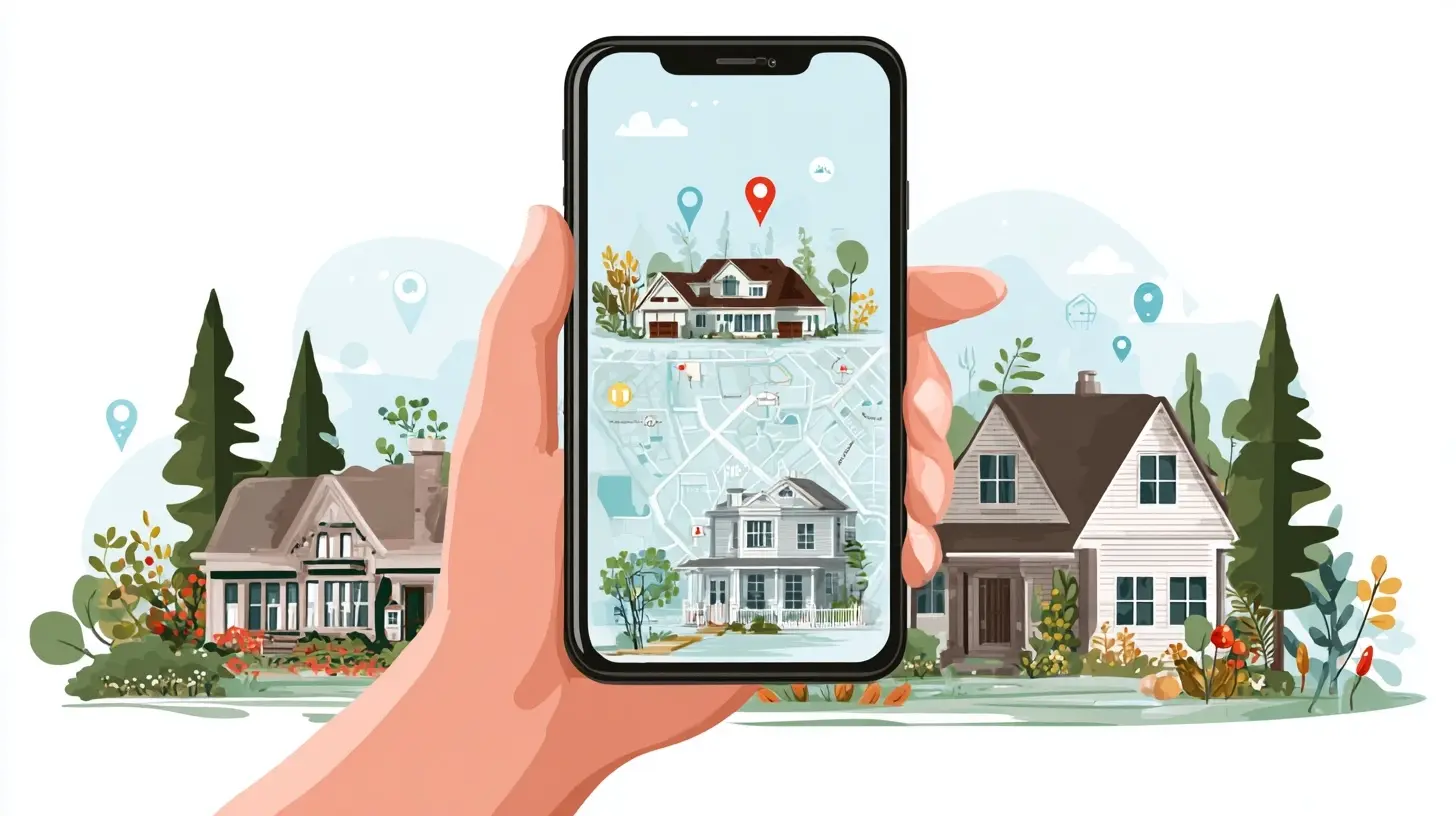
Some buyers think in lists. Others think in geography. A map-first search app lets you draw boundaries, filter by school attendance zones, and see how commute times shift as you drag a pin. This matters more than people expect. Two homes a mile apart can sit in different school zones, different flood plains, and different tax districts.When to use it: early, when you are still deciding which neighborhoods fit your life. When not to rely on it: once you have narrowed to a few streets, because map data lags behind reality. A new development or a rezoned parcel may not appear for months.
The Off-Market and Coming Soon Tracker
In competitive markets, the best homes sometimes sell before they hit the public feed. Apps that track coming soon listings, expired listings, and for-sale-by-owner properties can give you a slight edge. The trade-off is noise. Many of these apps surface properties that are not truly available, and some charge for access to data that is already public.A practical rule: use one off-market tool at most, and only if you are actively searching in a market where inventory is tight. In a balanced market, it adds complexity without adding much value.
Stage Two: Financial Apps That Keep You Honest
This is where serious buyers separate themselves. The purchase price is only one number. The real cost includes the rate, the term, property taxes, insurance, maintenance, and the opportunity cost of your down payment.Mortgage Calculators Worth Using
Most mortgage calculators are too simple. They estimate a monthly payment and stop. A better calculator lets you compare scenarios side by side: fifteen-year versus thirty-year, different down payment levels, and the effect of paying points upfront.Why this matters: a lower monthly payment is not always the cheaper loan. Stretching to thirty years reduces your payment but can add tens of thousands in interest. Paying points lowers your rate but increases your closing costs, and it only pays off if you stay in the home long enough to break even. A good calculator shows you the break-even point instead of hiding it.
Common mistake: using the calculator's default tax and insurance estimates. These are often wrong by a wide margin. Pull the actual tax rate from the county assessor and get a real insurance quote before you trust the number.
Pre-Approval and Document Apps
Pre-approval is not the same as pre-qualification. Pre-qualification is a rough estimate. Pre-approval means a lender has reviewed your income, assets, and credit. In 2027, many lenders let you upload documents through an app, track your application status, and receive a verified pre-approval letter digitally.Use this to your advantage in two ways. First, a verified pre-approval strengthens your offer. Second, it forces you to confront your real budget before you fall in love with a house you cannot afford. The app is not the point. The discipline it enforces is.
Credit and Debt Monitoring
Your credit score affects your rate, and your rate affects everything. An app that monitors your score and flags changes is useful during the months before you apply. But be careful with credit monitoring apps that push new credit cards or loans. Opening a new account mid-process can lower your score and complicate your approval.Best practice: check your credit at least six months before you plan to buy. Dispute errors early. Do not open new accounts during the process unless your lender tells you it is safe.

Stage Three: Due Diligence Apps
This is the stage buyers rush, and it is the stage that costs the most when rushed.Property History and Risk Apps
Apps in this category compile public records: permits, liens, flood zone maps, environmental hazards, and sometimes crime data. They can reveal that a "renovated" kitchen was done without a permit, or that the property sits in a flood plain that will require expensive insurance.Why it works: public records are decentralized and painful to search manually. An app that aggregates them saves hours. Where it fails: data can be stale, incomplete, or misattributed. Never treat an app's risk score as final. Use it to generate questions for your inspector, your agent, and your insurance provider.
Inspection and Repair Estimation Apps
Some apps help you log inspection findings, attach photos, and request repair quotes. This is genuinely useful when you are negotiating credits. Instead of arguing about whether a roof needs replacing, you have a contractor's estimate in hand.A word of caution: an app's repair estimates are ballpark figures. Local labor costs vary widely. A roof estimate generated by an algorithm may be off by thousands. Use the app to organize, not to price.
Neighborhood and Commute Analysis
Apps that model commute times, walkability, and future development can be revealing. A quiet street today may become a thoroughfare if a new highway project is approved. A short commute today may double if a major employer moves.The limitation: predictions are uncertain. Zoning changes, school redistricting, and infrastructure projects can be delayed or canceled. Use these apps to ask better questions at city planning meetings, not to make final decisions.
Stage Four: Transaction Coordination Apps
Once you are under contract, the clock starts. Inspections, appraisals, loan underwriting, title search, and closing all have deadlines. Missing one can cost you the deal or your deposit.Document and E-Signature Platforms
Most transactions now run on secure document platforms. You will sign disclosures, review closing statements, and receive wire instructions through these systems. The advantage is speed and a clear record. The risk is phishing. Criminals impersonate title companies and send fake wire instructions. Always verify wiring details by phone using a number you looked up independently, never a number from an email.Closing Cost and Escrow Trackers
Apps that track your closing costs, escrow balance, and loan milestones help you avoid surprises at the closing table. A small discrepancy in escrow can mean hundreds of dollars. Review the closing disclosure at least three days before closing, as required, and compare it line by line with your loan estimate.Agent and Communication Tools
Some buyers use shared workspaces to communicate with their agent, inspector, and lender in one place. This reduces the chance that a critical message gets lost in a text thread. It is not essential, but in complex transactions with multiple parties, it helps.
Stage Five: Post-Closing Apps
The purchase is not the end. It is the beginning of ownership, and the apps you keep matter.Home Maintenance and Document Vaults
An app that stores your inspection report, warranty documents, and maintenance schedule pays for itself the first time something breaks. When the water heater fails, you will want the model number, the install date, and the warranty terms in one place.Utility and Service Management
Apps that help you set up utilities, schedule services, and track home expenses are useful, especially for first-time buyers who underestimate the cost of ownership. Budget for maintenance at roughly one percent of the home's value per year, though older homes often cost more.Property Tax and Insurance Monitoring
Your tax assessment can change, and your insurance premium can rise after a claim or a market shift. An app that monitors these keeps you from being surprised by a higher escrow payment.How to Build Your Stack Without Overloading It
The temptation is to install everything. That leads to notification fatigue and decision paralysis. A better approach:- Pick one app per stage. Two at most.
- Delete anything you have not opened in thirty days.
- Keep a single note or document with your key numbers: budget, rate, closing costs, and deadlines.
- Never let an app replace a professional. Inspectors, appraisers, and attorneys exist for a reason.
Common Mistakes and Misconceptions
Mistake: Trusting the estimate. Every app estimate, from home value to repair cost, is a model, not a fact. Models are wrong in unusual properties and fast-moving markets.Mistake: Sharing too much data. Some apps collect more personal information than they need. Read permissions before granting access to your contacts, location, or financial accounts.
Misconception: More apps mean more control. Control comes from understanding the process, not from installing software. A buyer with three well-chosen apps and a good agent will outperform a buyer with twenty apps and no strategy.
Misconception: The app knows the market. Apps reflect data. Markets are driven by people, credit conditions, and local supply. Data lags reality, sometimes by weeks.
Final Thoughts
The apps that matter in 2027 are not the flashiest ones. They are the ones that reduce uncertainty at the moments when uncertainty is most expensive: when you set your budget, when you evaluate risk, and when you sign. Choose them deliberately, question their outputs, and keep a human in the loop for every decision that cannot be undone.
all images in this post were generated using AI tools
Category:
Real Estate AppsAuthor:

Basil Horne