Why Arches and Curves Are Making a Big Comeback in Home Design
22 October 2026
For most of the past century, the straight line ruled residential architecture. Modernism turned the right angle into a moral position, and by the 1990s and 2000s, the typical suburban home was a stack of rectangles with square drywall corners everywhere you looked. Then something shifted. Walk through new construction in almost any major market today and you will see rounded kitchen islands, arched doorways, barrel-vaulted hallways, curved shower niches, and furniture with soft, organic silhouettes. The curve is back, and this time it is not a niche revival for period homes. It is showing up in contemporary builds, renovations, and commercial spaces alike.
This is worth examining carefully, because curves are not a simple aesthetic swap. They change how a house is framed, drywalled, trimmed, furnished, and priced. Homeowners who understand those trade-offs will get far better results than those who simply ask a contractor to "add some arches."
What Is Actually Driving the Comeback
The revival is not a single trend. It is the convergence of several forces, and understanding them helps explain why curves are likely to stay rather than fade like a seasonal paint color.A reaction against hard-edged minimalism
The minimalist movement delivered clean lines and open plans, but many homeowners found the result cold and acoustically harsh. A room full of flat planes, glass, and hard corners reflects sound and offers few visual resting points. Curves soften a space in ways that are genuinely perceptible. A rounded corner catches light gradually instead of creating a hard shadow line. An arched opening frames a view rather than slicing it. Designers often describe this as "visual comfort," and it is a real phenomenon: the eye tracks curved edges more smoothly than it tracks abrupt direction changes.Social media and the photographable interior
Curved forms photograph beautifully. An arched niche with a vase and a lamp reads as a complete composition, while the same objects against a flat wall look ordinary. Platforms built around images rewarded interiors that look distinctive in a thumbnail, and the arch became one of the most recognizable visual signatures of the past several years. Whether or not you care about social media, the effect on design supply is real: manufacturers noticed demand and expanded their catalogs, which lowered prices and shortened lead times.Advances in building materials
Curves used to mean plaster over lath, a genuinely difficult and expensive craft. Today, flexible drywall, bendable plywood, curved corner bead, CNC-milled trim, and preformed arch kits make curved construction far more accessible. This matters more than any aesthetic argument. A design idea only becomes a mass trend when the labor and materials to execute it become affordable, and that threshold has clearly been crossed.The wellness and biophilia conversation
Curved forms echo natural shapes: riverbeds, tree trunks, hills, the human body. Designers working in the wellness space have leaned on this association, arguing that organic geometry reduces the visual tension of a space. Treat that claim with appropriate caution. There is no rigorous body of evidence proving that an arch lowers stress, and anyone who tells you otherwise is overselling. What is fair to say is that many people find curved interiors more restful, and in residential design, subjective comfort matters.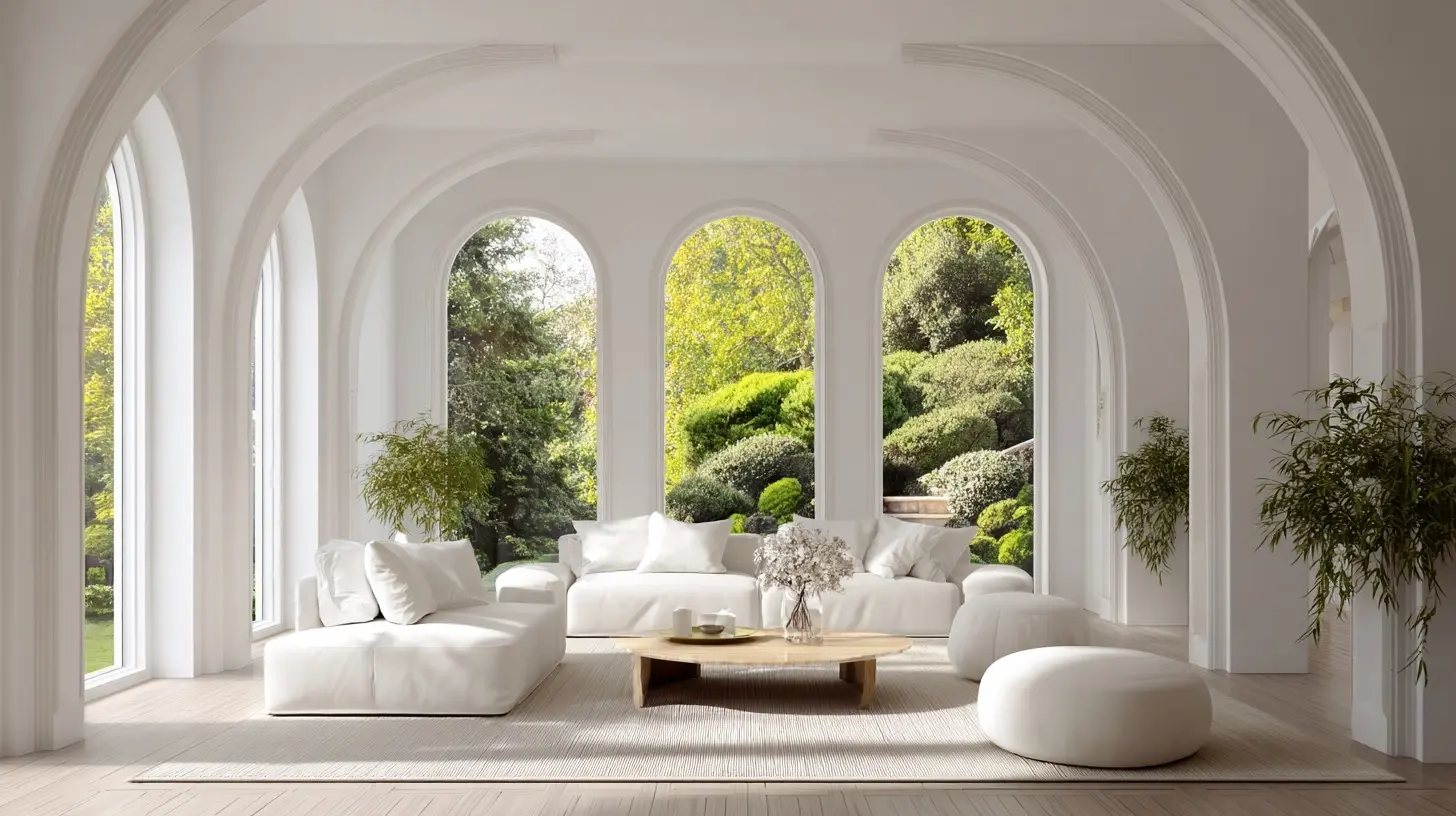
Where Curves Work Best
Not every curve belongs everywhere. The most successful projects use them with intention, usually in a few specific roles.Transition and threshold
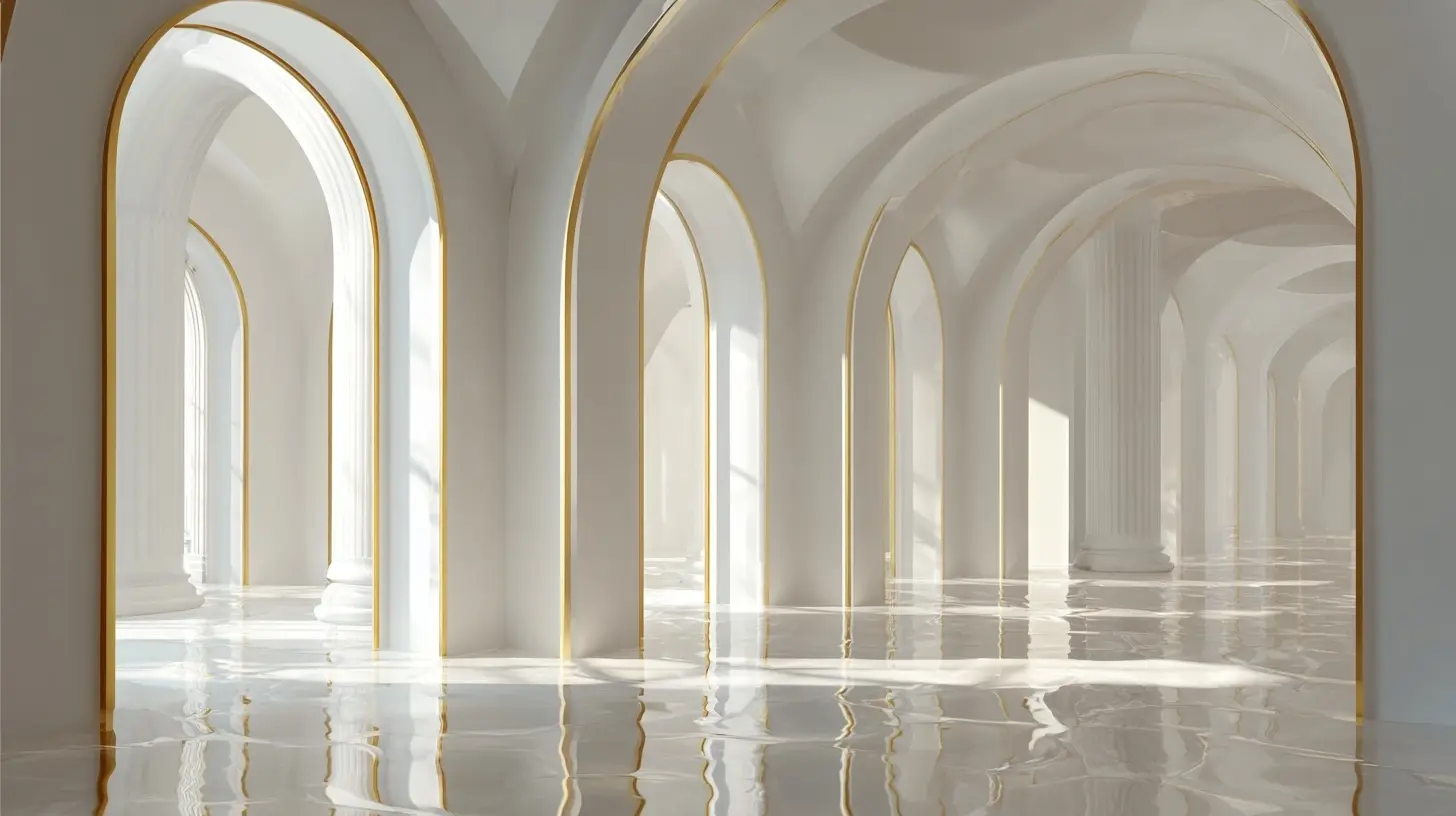
Arched openings between rooms are the most common and most forgiving application. An arch signals a change of space, adds height to a doorway, and frames whatever lies beyond. A standard eight-foot opening with a shallow segmental arch costs relatively little to build and reads as a deliberate architectural gesture rather than a gimmick. This is the best entry point for most homeowners.Focal elements
A barrel-vaulted ceiling in a hallway, a curved kitchen island, or a rounded fireplace surround gives a room a clear center of gravity. The key is scarcity. One strong curved element in a room reads as a designed feature. Five of them read as a theme park.Softening structural bulk
Columns, beams, and chimney breasts are often visually intrusive. Wrapping a structural column in a rounded enclosure or curving a soffit around a duct run turns an eyesore into a feature. This is one of the most practical uses of curved construction, because you are solving a real problem rather than adding decoration.Furniture and fixtures
Curved sofas, round dining tables, pill-shaped mirrors, and oval bathtubs are lower-commitment ways to bring softness into a room. They can be changed later, unlike a plastered arch. If you are unsure whether you like curves, start here.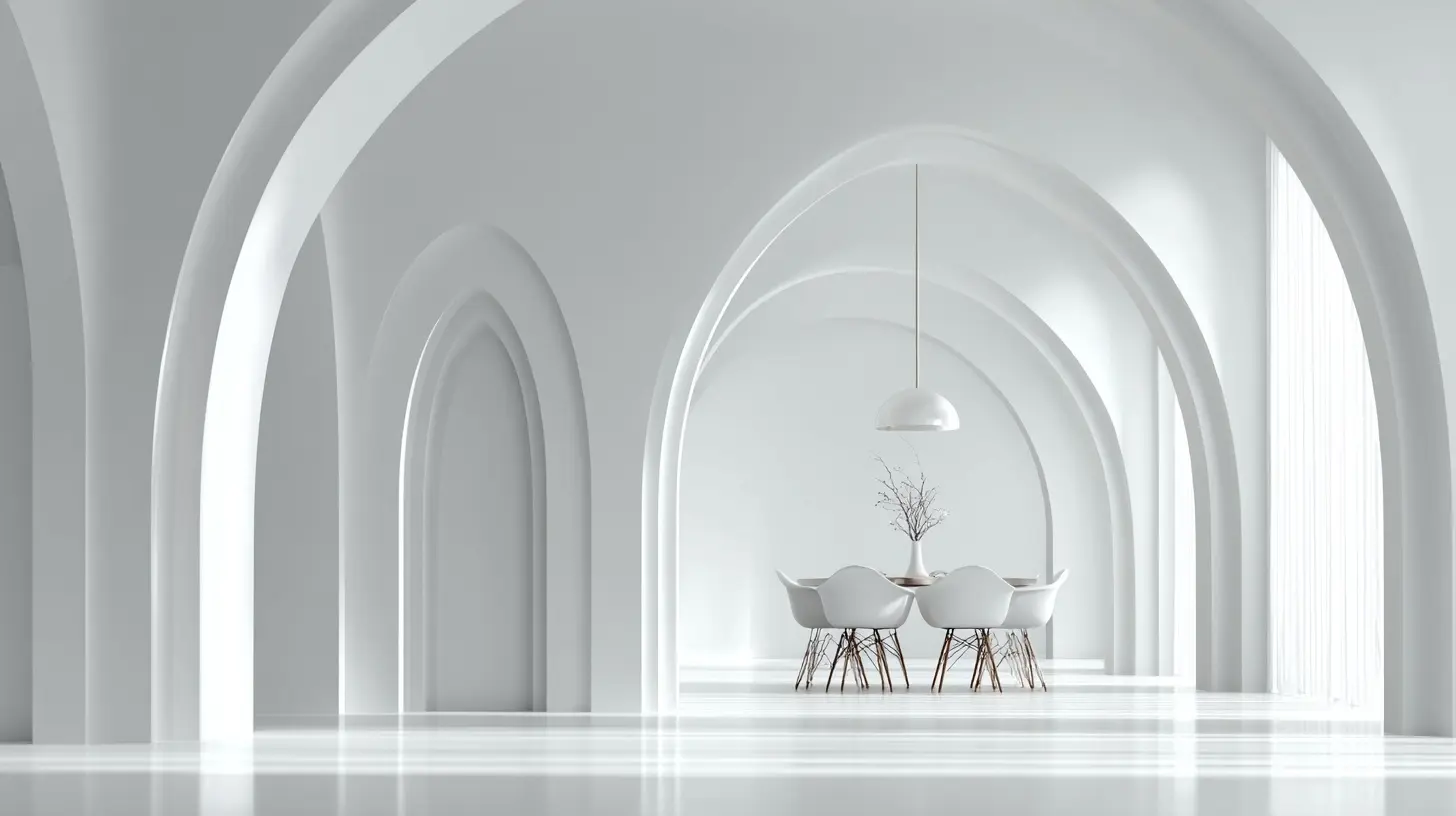
Where Curves Go Wrong
The failures are predictable, and most of them come from applying curves without adjusting the surrounding design.Mixing vocabularies carelessly
An arch is not a neutral shape. It carries associations: Romanesque, Moorish, Art Deco, Spanish Colonial, mid-century modern. Dropping a dramatic Moorish arch into a crisp Scandinavian interior creates visual conflict unless the designer deliberately bridges the two languages. The most coherent projects pick one curved idiom and repeat it, whether that is a soft radius on cabinetry, a shallow segmental arch at doorways, or a full round on furniture.Over-curving small rooms
Curves consume floor area. A rounded kitchen island loses usable counter depth at its ends. A curved wall eats into a bedroom. In a tight room, curves can make circulation feel pinched. Small spaces usually benefit from one curved element and straight lines elsewhere, not a full set.Ignoring the sightlines
An arch frames whatever is behind it. If the view through the arch is a cluttered hallway or the side of a refrigerator, the arch will amplify that problem. Before committing, stand where the arch will be and look through it. Successful arched openings almost always frame something worth seeing.Forgetting about door swings and furniture
A curved wall or rounded corner changes where a door can swing, where a cabinet can sit flush, and where a sofa can back up. These conflicts are easy to miss on a plan and expensive to fix after framing. Walk the layout with furniture dimensions in hand.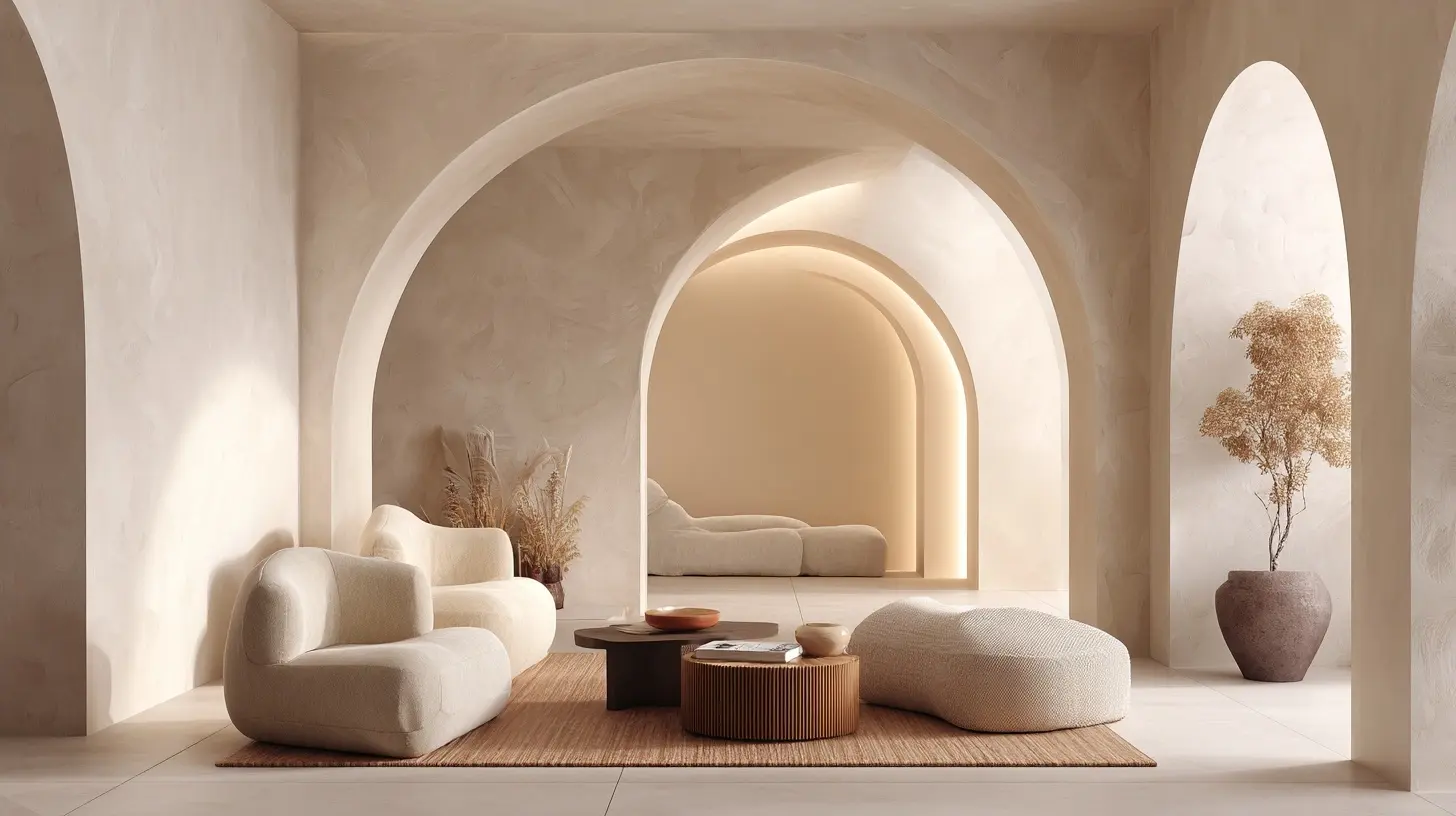
The Practical Construction Realities
This is where most articles stop, and where homeowners most need honesty.Framing and drywall
Curved walls are typically framed with closely spaced studs and covered in flexible drywall, sometimes wetted or scored to bend. Tight radii require multiple layers or specialized boards. The labor is skilled and slower than straight drywall, and the finish quality depends heavily on the installer. A poorly executed curve shows every ripple under raking light. Ask to see previous curved work, and visit it in person if possible.Trim and millwork
Curved casing, baseboard, and crown molding are either custom-milled or built up from flexible segments. Custom milling is beautiful and expensive. Flexible trim is cheaper but has visible limits on how tight a radius it can follow. For painted trim, a skilled carpenter can sometimes bend standard stock; for stained wood, expect custom work.Cost expectations
As a general rule, expect curved elements to cost meaningfully more than their straight equivalents, often in the range of 50 to 150 percent more depending on complexity and finish. A simple arched doorway in drywall is at the low end. A curved staircase, a barrel-vaulted ceiling with integrated lighting, or a radiused kitchen island with a waterfall counter is at the high end. Get itemized quotes rather than lump sums so you can see what the curve itself is costing.Lead times
Custom curved cabinetry, arched steel doors, and radiused glass can add weeks to a schedule. Glass, in particular, is a common bottleneck: curved glass is expensive and slow. Plan these items early in the project timeline.Curves in Specific Rooms
Kitchens
The curved island is the signature move of the current era, and it works for a specific reason: it softens the hardest-working room in the house and improves circulation. A rounded end on an island creates a natural gathering point and removes a sharp corner that people bump into. The trade-off is lost storage and counter area at the curve, plus higher fabrication cost for the countertop. A good compromise is a straight run of cabinetry with one rounded end, or a curved seating overhang rather than a fully curved base.Bathrooms
Arched shower niches, rounded mirrors, and curved vanities are widespread because they are relatively inexpensive and highly visible. Curved shower enclosures are more complex; frameless curved glass is costly, and curved tile requires careful layout to avoid awkward cuts. A practical middle path is a straight enclosure with a curved niche and an arched opening to the shower.Living and dining rooms
Round and oval dining tables improve conversation and flow in tight rooms, and curved sofas anchor a seating group without the boxy formality of a sectional. The main risk is furniture that fights the architecture. If the room already has strong curves, choose straighter furniture, and vice versa.Hallways and stairwells
Barrel vaults and curved stair walls are the most dramatic applications and the most expensive. They pay off in circulation spaces because those areas are experienced in motion, and a curve reads well as you walk through it. Budget carefully and expect a longer build.
Common Misconceptions
"Curves are a passing trend." Some applications will date, particularly highly stylized arches in strong colors. But curved geometry has been part of residential architecture for millennia, and the underlying drivers, softer materials, better manufacturing, and a desire for visual comfort, are not going away. The safer bet is to use curves in ways that read as structural rather than decorative."Curves make a room look bigger." Sometimes, but not reliably. Curves can improve flow and reduce visual harshness, but they do not create floor area, and in small rooms they can reduce usable space. Do not buy the claim that an arch will make a cramped hallway feel expansive. It will make it feel more interesting, which is a different benefit.
"Any contractor can do curves." Many can, but skill varies enormously. Curved drywall and curved millwork are specialties. Ask for references and inspect the work.
"Curves are only for traditional homes." Contemporary homes use curves constantly, from rounded drywall corners to organic furniture. The idiom differs, but the geometry is the same.
Best Practices Before You Commit
- Decide the role of the curve first: transition, focal point, or problem solver. Design from that purpose.- Limit yourself to one or two curved gestures per room unless you are working with an experienced designer.
- Check sightlines through every arched opening before framing.
- Confirm furniture layouts and door swings against curved walls on paper.
- Get itemized quotes so you understand the true cost of the curve.
- Order curved glass, custom millwork, and specialty trim early.
- Inspect curved drywall under raking light before painting.
- Choose lighting that grazes curved surfaces; a curve lit from the side reads far better than one lit from directly above.
A Balanced View
Curves are neither a cure-all nor a fad to dismiss. They solve real problems, soften hard interiors, and create memorable spaces when used with discipline. They also cost more, demand skilled labor, and punish careless planning. The homeowners who get the best results treat curves as one tool among many, chosen for a reason and executed by people who have done it before. That is a less glamorous story than the one circulating on social media, but it is the one that holds up after the paint dries.
all images in this post were generated using AI tools
Category:
Home DesignAuthor:

Basil Horne