The Struggle to Build Homes Fast Enough in High-Demand Areas
25 October 2026
Walk through almost any thriving city and you will see the same tension playing out. Cranes rise over a handful of new apartment buildings while long waiting lists form for rentals that have not even opened. Employers post jobs faster than workers can find places to live. Local governments promise housing reform, then approve a fraction of what their own plans call for. The gap between how many homes people need and how many actually get built is one of the defining economic problems of our time, and it resists easy answers.
This article examines why construction cannot keep pace in high-demand areas, what forces are genuinely at work, and how developers, policymakers, and communities can respond more effectively. The goal is not to assign blame but to explain the mechanics of the problem clearly enough that readers can make better decisions within it.

What "High-Demand" Really Means
Demand for housing is not a single number. It is a stack of overlapping pressures. Job growth pulls workers into a region. Wage growth lets those workers bid up rents. Demographic shifts, such as young adults forming households or retirees relocating, change what kinds of homes are needed. International migration adds another layer. Investor capital, both domestic and foreign, treats housing as a store of value, which adds purchasing power without adding residents.A common misconception is that demand is purely about population growth. Some of the most supply-constrained markets in the world have modest population growth. Their problem is that demand is concentrated in a small geographic area where building is hardest, and that existing residents have strong incentives to keep it that way. When people say a place is "in demand," they usually mean demand is high relative to the number of homes that can realistically be delivered there, not relative to the number of people who want to live in the broader region.
This distinction matters because it changes the solution. If demand were simply a numbers problem, building anywhere in the region would help. In practice, housing markets are local. A new subdivision forty miles from the job center does little for a nurse who needs to be near a hospital at six in the morning. Supply has to arrive in the right places, at the right prices, and at the right time.
The Anatomy of a Slow Build
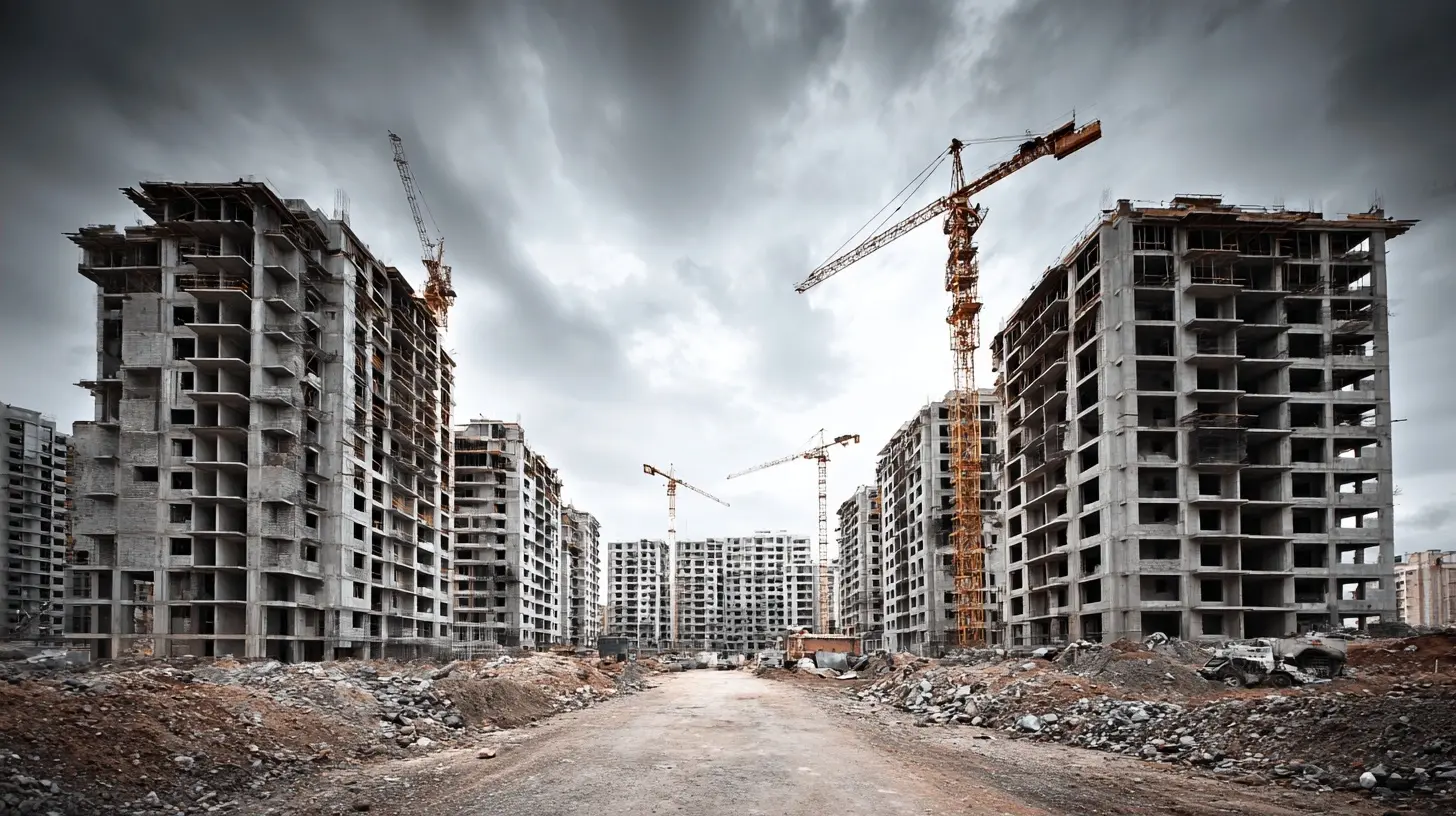
Most people assume that the main obstacle to building homes is construction itself. In reality, construction is often the shortest phase of the process. A typical multifamily project in a high-demand city can spend years in entitlement, design review, financing, and permitting before a single foundation is poured. Understanding where the time goes is essential to understanding why the system struggles.Land acquisition and site control
Before anything happens, a developer must assemble land. In desirable areas, parcels are often small, oddly shaped, or held by owners who have no urgency to sell. Assembling several adjacent lots can take years and may fail if a single owner refuses. Developers frequently pay for options or hold deposits on land while they pursue approvals, which ties up capital and raises the cost of the eventual project. Every month of delay adds carrying costs that must eventually be recovered through sale prices or rents.Entitlements and discretionary review
This is where most of the time is lost. Entitlement is the process of securing legal permission to build a specific project on a specific site. In many jurisdictions it involves zoning review, design review, environmental assessment, public hearings, and appeals. Each stage can add months. Some cities have layered review processes where a project must satisfy multiple boards with overlapping authority, and a single objection can send a project back to an earlier stage.The discretionary nature of these reviews is the crux of the problem. When approval depends on the judgment of appointed officials or the mood of a public hearing, outcomes become unpredictable. Unpredictability is expensive. Lenders charge more, developers build larger contingency margins into their budgets, and some projects never proceed at all because the risk-adjusted return does not justify the effort.
Financing and the cost of time
Construction loans, equity partners, and predevelopment capital all carry expectations of return. When a project takes five years from land purchase to lease-up instead of three, the same building must generate more revenue to satisfy investors. In a market where rents are capped by what tenants can pay, that math often fails. The result is that projects which would have been viable under a faster process simply do not get built.Construction capacity
Even after approvals, the building industry faces real constraints. Skilled trades are in short supply in many regions. Material costs fluctuate. General contractors can be selective about which projects they take, and smaller developers often struggle to secure favorable bids. Modular and prefabricated construction promise speed, but they require factory capacity, standardized designs, and a pipeline of orders large enough to keep production lines running. These methods work well in some contexts and poorly in others, and they are not a universal fix.
Why Local Opposition Is Not Simply NIMBYism
It is tempting to dismiss neighborhood resistance as selfishness. That framing is both unfair and unhelpful. Opposition to new housing often comes from people who have rational concerns, even if those concerns are sometimes exaggerated or misdirected.Existing residents worry about parking, traffic, school capacity, and the character of their streets. They worry that new construction will lower their property values, though the evidence on this is mixed and highly context-dependent. They worry about construction noise and disruption. Some have watched earlier developments arrive without the infrastructure improvements that were promised.
These concerns deserve serious engagement, but they also reveal a structural problem. When new residents arrive, the costs of growth are often borne locally while the benefits are spread regionally. A city that approves thousands of new homes absorbs the traffic and school impacts while the regional economy captures the productivity gains. Until that imbalance is addressed through infrastructure funding, school planning, and revenue sharing, local resistance will remain rational even when it is collectively harmful.
A second issue is that public participation processes tend to amplify the voices of those most opposed to change. People who will benefit from new housing, including future residents who do not yet live in the area, are not in the room. This asymmetry shapes outcomes. Reforms that set clear rules in advance, rather than deciding case by case, can reduce this imbalance without eliminating public input.
The Infrastructure Bottleneck Nobody Talks About
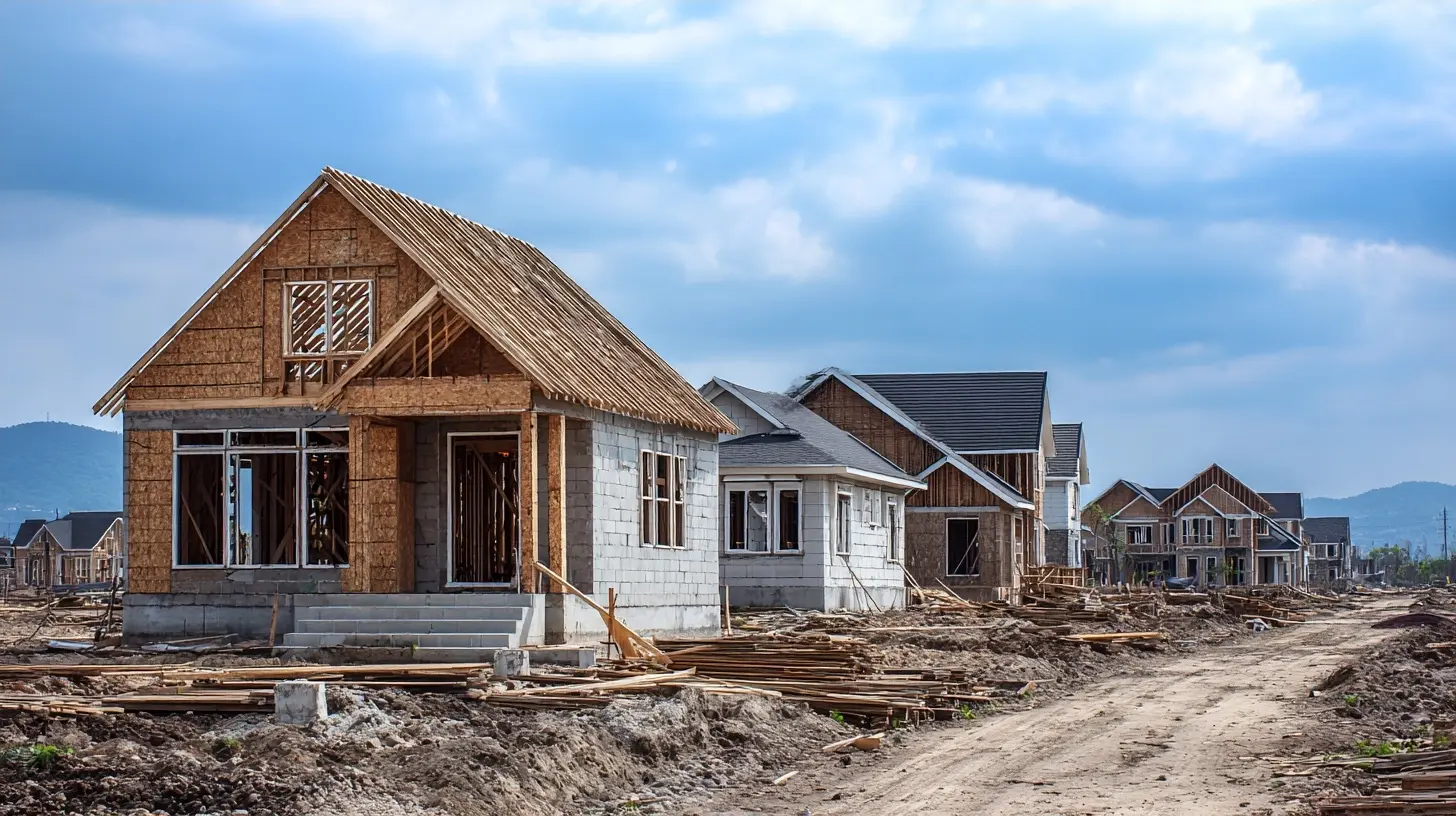
Housing does not exist in isolation. It requires water, sewer, electricity, roads, transit, schools, and emergency services. In many high-demand areas, the infrastructure that supports new homes is already at or near capacity. A sewer line may be sized for the neighborhood as it existed decades ago. A school may already be over capacity. A fire station may not be able to serve additional blocks within acceptable response times.Developers often discover these constraints late, after they have spent money on design and approvals. The result is either a reduced project scope, a lengthy wait for infrastructure upgrades, or cancellation. Some jurisdictions address this through impact fees that fund capacity improvements, but the timing rarely aligns. Fees are collected when a project is built, while the infrastructure it depends on must exist beforehand.
The practical implication is that housing policy and infrastructure policy must be coordinated. Cities that plan for growth by pre-investing in water and sewer capacity, or by allowing developers to fund and build necessary upgrades, move faster than cities that treat each project as an isolated request.
What Actually Works: Lessons From Places That Build
No single policy solves the housing shortage, but some approaches consistently deliver more homes per year than others. The common thread is predictability.By-right approvals for compliant projects
When a project meets a published set of standards, it should receive approval without a discretionary hearing. This approach, sometimes called ministerial approval, removes the uncertainty that drives up costs and delays. It does not eliminate design standards. It simply makes the outcome knowable in advance. Cities that have adopted this for certain housing types, such as small multifamily buildings or accessory dwelling units, have generally seen more of those homes built.The trade-off is that by-right approval reduces the ability to negotiate community benefits project by project. That is a real loss for some neighborhoods. The counterargument is that negotiated benefits often cost more in delay than they deliver in value, and that predictable rules can include the benefits up front.
Legalizing more housing types
Many high-demand neighborhoods are zoned exclusively for single-family homes, even when they sit near transit and job centers. Allowing duplexes, triplexes, and small apartment buildings in those areas expands capacity without dramatic change to the streetscape. This is not a silver bullet, and results depend heavily on market conditions and construction economics. In some places, the cost of building small infill projects exceeds what the finished units will sell for, so legalization alone does not guarantee construction.Streamlining and time limits
Some jurisdictions impose deadlines on review stages. If a planning department does not act within a set period, the application is deemed approved or the applicant can appeal to a higher authority. These rules force agencies to prioritize and staff appropriately. They work best when paired with adequate funding for planning departments, which are often understaffed relative to their workloads.Fee waivers and deferred payments
Impact fees and permit costs can be a significant barrier for smaller projects. Deferring payment until occupancy, or waiving fees for certain unit types, can make marginal projects viable. The trade-off is that the city must find another way to fund infrastructure, so this tool works best when paired with broader revenue reform.
The Role of Construction Technology and Methods
Off-site construction, including modular and panelized systems, can compress schedules because site work and factory work happen simultaneously. It can also improve quality control and reduce weather delays. However, these benefits depend on scale. A factory needs a steady stream of orders to stay efficient. Developers need standardized designs to use factory capacity well. Financing and insurance for modular projects can be more complex than for conventional construction, and some lenders are unfamiliar with the approach.Prefabrication is most promising for repeated building types, such as hotels, student housing, and standardized apartment layouts. It is less suited to complex, site-specific designs or projects with irregular footprints. The realistic conclusion is that modular construction is a useful tool in specific circumstances, not a general solution to the housing shortage.
Common Mistakes and Misconceptions
A few recurring errors make the problem worse.The first is treating housing as a purely local issue. Regional housing markets require regional coordination. A city that builds aggressively while its neighbors build nothing will absorb demand from the entire region and face political backlash. Shared targets, shared infrastructure funding, and shared accountability across a metro area produce better outcomes than isolated local efforts.
The second is assuming that new market-rate housing only helps high-income households. New buildings, even expensive ones, add supply and relieve pressure across the market as higher-income renters move into them, freeing up older units. This process, sometimes called filtering, is slow and imperfect, but it is real. The mistake is relying on filtering alone. It must be paired with subsidized housing for households that the market cannot serve.
The third is overestimating the impact of any single reform. Upzoning a corridor is not the same as building homes on it. Legalizing a housing type does not guarantee that anyone will build it. Policies must be evaluated by outcomes, not intentions, and that means tracking actual permits and completions over time.
The fourth is ignoring the cost side of the equation. Construction costs, land costs, financing costs, and regulatory costs all determine whether a project pencils out. A jurisdiction that reduces approval time but raises fees will see limited results. The full cost stack matters.
Practical Guidance for Different Readers
For developers, the most important discipline is early due diligence on infrastructure capacity and political risk. Before committing to a site, confirm sewer and water availability, review the recent history of comparable projects in the area, and build realistic timelines into your pro forma. Underestimating entitlement time is the most common cause of project failure.For local officials, the highest-leverage actions are usually procedural. Set clear rules, publish timelines, staff review departments adequately, and coordinate infrastructure planning with housing targets. These steps do not require large budgets, but they require sustained attention.
For residents, the most useful contribution is to engage early and specifically. General opposition to growth rarely improves outcomes. Specific, actionable input on design, infrastructure, and phasing can shape projects for the better. Understanding the trade-offs, including the cost of delay, makes that engagement more productive.
A Realistic Outlook
The struggle to build homes fast enough will not be resolved by any single policy or technological breakthrough. It is a coordination problem involving land, law, money, infrastructure, and politics. Progress comes from many small improvements: faster approvals, more allowed housing types, better infrastructure planning, and more predictable rules.The places that succeed tend to share a willingness to measure results and adjust. They track how long approvals take, how many homes are permitted versus built, and where the bottlenecks are. They treat housing as essential infrastructure rather than a purely private transaction. That mindset, more than any specific reform, is what separates regions that keep pace with demand from those that fall further behind each year.
all images in this post were generated using AI tools
Category:
Real Estate ChallengesAuthor:

Basil Horne

