Smart Homes Get Smarter: Integrated Living in 2027
13 September 2026

The Shift From Gadgets to Infrastructure
For the past decade, the smart home conversation has been dominated by novelty. A voice assistant on the counter. A doorbell camera that pings your phone. A light bulb you can dim from a restaurant across town. These were impressive demonstrations, but they rarely added up to a home that genuinely worked better as a system. Each device solved a small problem while quietly creating new ones: another app, another account, another firmware update that might break something at 2 a.m.By 2027, the center of gravity has moved. The interesting story is no longer about individual devices. It is about integration, the connective tissue that lets lighting, climate, security, energy, and entertainment behave as one coordinated environment. This is where smart homes finally get smarter, and it is also where most homeowners still make expensive, avoidable mistakes.
If you are buying, renovating, or simply trying to make your current home more capable, the decisions you face in 2027 are different from the ones you faced even three years ago. Standards have matured. Interoperability has improved, though it is far from perfect. And the cost of getting the foundation wrong has gone up, because more of your daily life now depends on these systems functioning quietly in the background.
This article is about how to think through those decisions with clear eyes.
Why Integration Is the Real Upgrade
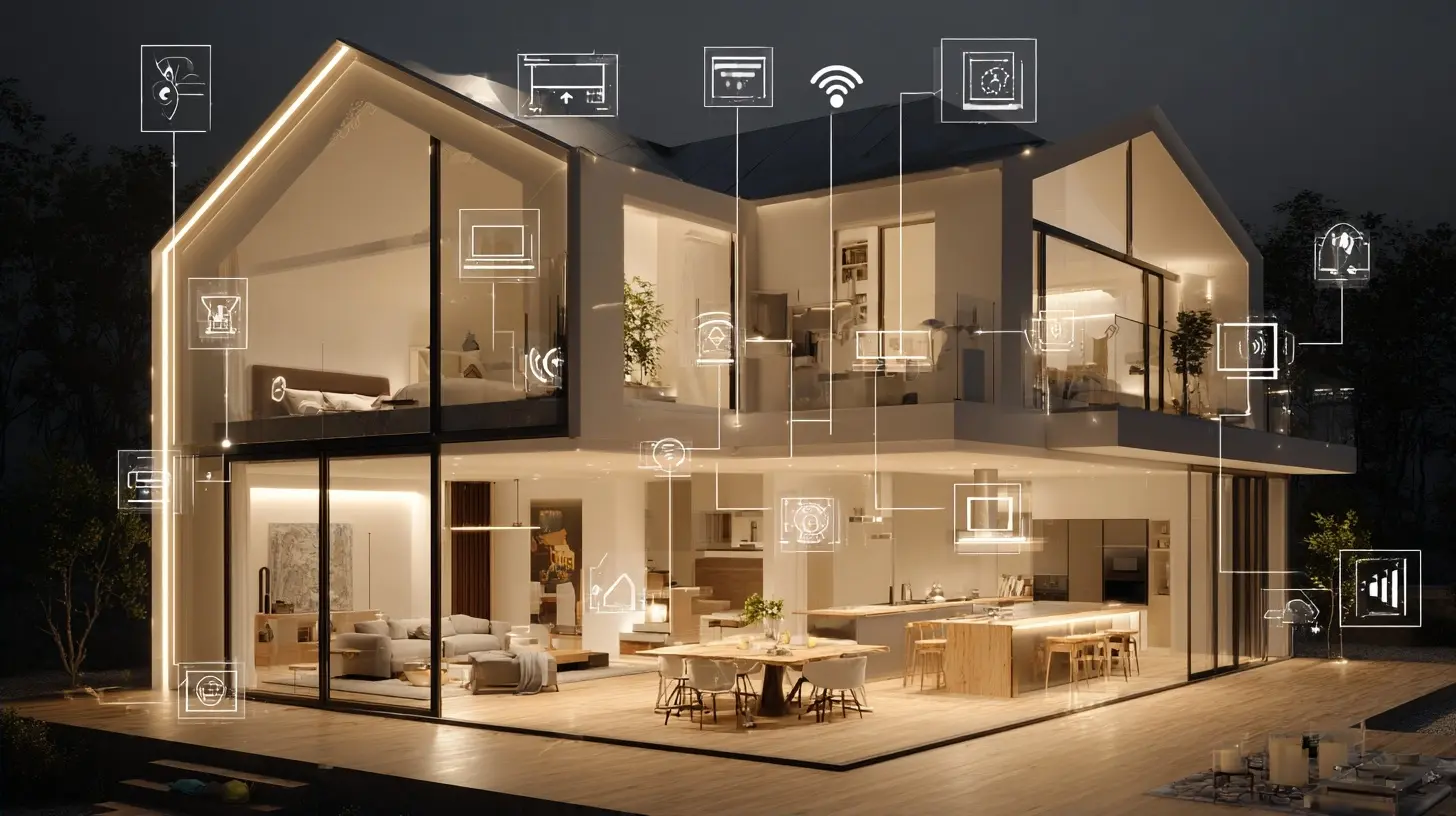
A single smart device is a tool. An integrated home is an environment. The difference matters because the value of a smart home is not the sum of its parts. It is the coordination between them.Consider a simple morning routine. Your alarm goes off. The bedroom lights gradually brighten to a warm tone that mimics sunrise. The thermostat, which has been running an energy-saving overnight schedule, begins warming the bathroom floor. The kitchen coffee maker starts. The security system disarms because it recognizes your phone is moving inside the house, not approaching from outside. None of this is science fiction. All of it is achievable today with the right architecture.
The reason this works is that each action is triggered by context rather than by a person pressing a button. Context is the currency of a genuinely smart home. A system that knows it is morning, knows you are home, knows the outdoor temperature, and knows your calendar is clear until 10 a.m. can make dozens of small decisions that reduce friction without ever asking for your attention.
The reason it often fails is that context is hard to assemble when your devices live in separate ecosystems. A camera that cannot talk to your lights cannot tell them to turn on when motion is detected. A thermostat that cannot see your calendar cannot pre-cool the house before you arrive. Integration is what converts isolated intelligence into ambient intelligence.
The Difference Between Automation and Intelligence
It helps to draw a sharp line between two things people often conflate.Automation is rule-based. If X happens, do Y. If the front door unlocks, turn on the hallway light. This is reliable, predictable, and cheap. It is also brittle. Change your routine and the automation becomes wrong.
Intelligence is adaptive. It observes patterns, weighs probabilities, and adjusts. A system that notices you usually dim the lights around 9 p.m. and starts offering to do it for you is operating on a different level than one following a fixed schedule.
In 2027, most homes sit somewhere in between. True machine-learning-driven home intelligence is real but uneven. It works well in narrow domains like thermostats and lighting, where the variables are limited and the feedback is clear. It works poorly in complex domains where the system cannot reliably interpret human intent. The practical takeaway is this: build your home on solid automation first, then layer intelligence where it genuinely helps. Do not buy a house full of "AI-powered" devices that cannot perform basic reliable automation.
The Standards That Finally Made Integration Practical
For years, the biggest obstacle to a coherent smart home was the absence of a common language. Every manufacturer built its own protocol, its own hub, its own cloud. If you wanted everything to work together, you either committed to one brand or spent weekends writing scripts.Two developments changed that landscape.
Matter and Thread
Matter is an interoperability standard backed by a broad coalition of manufacturers. Its promise is straightforward: a device certified for Matter should work with any Matter-compatible controller, regardless of brand. Thread is a low-power mesh networking protocol that many Matter devices use for communication. Together, they represent the most serious attempt yet to make smart home devices behave like appliances rather than fiefdoms.In practice, Matter in 2027 is good but not flawless. Basic functions like on, off, dim, and lock generally work across ecosystems. Advanced features often remain locked behind the manufacturer's own app. A light that supports Matter might respond to your voice assistant, but its special lighting scenes might only be configurable through the brand's software. This is not a dealbreaker, but it is a reality you should plan around.
Thread has proven more robust than early critics expected. Its mesh design means devices reinforce each other's signal, which helps in larger homes where Wi-Fi struggles. The catch is that Thread requires a border router, a device that bridges the Thread network to your main network. Many smart speakers and hubs now include this function, but you should verify before assuming your existing hardware qualifies.
The Practical Implication
When you shop in 2027, Matter and Thread support should be near the top of your checklist. Not because they guarantee a perfect experience, but because they dramatically reduce the risk of being locked into a dead ecosystem. A Matter device from a company that goes out of business may still function locally. A proprietary device from the same company becomes a paperweight.That said, do not treat Matter as a magic wand. Some categories, particularly high-end audio and complex security systems, still rely on proprietary protocols for good technical reasons. Latency, bandwidth, and reliability requirements differ across device types. A unified standard cannot serve every use case equally well.
Designing for Integration: The Decisions That Matter Most
If you are building or renovating, you have a rare advantage: you can make structural decisions that are painful or impossible to change later. If you are retrofitting, you need to work within constraints. Both paths benefit from the same underlying principles.Start With the Network, Not the Devices
The single most common mistake in smart home projects is buying devices before designing the network. Every smart device depends on connectivity, and connectivity is where most frustration originates.A few guidelines:
- Wired beats wireless for anything stationary and critical. If you are renovating, run Ethernet to locations where you plan to put access points, cameras, or media equipment. The cost is modest during construction and enormous afterward.
- Plan for Wi-Fi coverage as a system, not a single router. Mesh systems have improved, but a well-placed set of access points connected by wire will outperform them in most homes.
- Separate your smart home traffic from your personal traffic. Many routers support a guest or IoT network. This improves security and reduces congestion.
- Do not overload any single protocol. Wi-Fi, Thread, Zigbee, and Z-Wave each have strengths. A home that relies entirely on Wi-Fi for forty devices will eventually choke.
The reason this matters is that integration depends on reliable communication. A brilliant automation is worthless if the device it controls drops offline twice a day.
Choose a Controller Philosophy
There are three broad approaches to controlling an integrated home, and each has real trade-offs.Cloud-first. Your devices talk to manufacturer servers, and your automations run there. This is the easiest to set up and often the most feature-rich. It is also the most fragile. If the manufacturer's servers go down, your home stops being smart. If the company changes its terms, your functionality may change with it.
Local-first. Your automations run on a hub inside your home. This is faster, more private, and more resilient. It requires more setup and sometimes more technical comfort. Platforms like Home Assistant have made this far more accessible, but it is still a hobbyist-leaning path.
Hybrid. Many homes in 2027 use a mix. Cloud services handle voice assistants and remote access. Local hubs handle time-critical automations like lighting and security. This is often the most pragmatic choice, but it demands that you understand which functions depend on the internet and which do not.
The right answer depends on your tolerance for tinkering and your need for reliability. A homeowner who travels frequently and needs remote monitoring may accept cloud dependence. A homeowner who wants a system that works during an internet outage should prioritize local control for anything essential.
Think in Scenes, Not Devices
Beginners think about controlling devices. Experienced users think about scenes, which are coordinated states across multiple devices.A "Good Night" scene might lock the doors, arm the security system, turn off downstairs lights, set the thermostat to an overnight schedule, and dim the hallway to a low path light. One command, many actions.
The reason scenes work so well is that they match how people actually live. You do not think "I want the living room lamp at 40 percent." You think "I am going to bed." Scenes translate intent into configuration. They also reduce the cognitive load of managing a complex system, because you interact with a handful of scenes rather than dozens of devices.
A practical tip: name scenes after moments, not devices. "Movie Night" is better than "Dim Lights and Turn On Surround Sound." You will remember it, and so will your guests.
Energy Management: The Quiet Killer Feature
Of all the areas where integration pays off, energy management may be the most underrated. It is also where the financial case is clearest.A fully integrated home can coordinate energy use across systems that traditionally operated in isolation. Your thermostat, your solar panels, your battery storage, your electric vehicle charger, and your major appliances can all share information and make collective decisions.
Consider a home with solar panels and a home battery. On a sunny afternoon, the system might pre-cool the house using solar energy, charge the battery, and delay the dishwasher until the battery is full. In the evening, when rates spike, the home draws from the battery instead of the grid. None of this requires the homeowner to do anything.
The reason this works is that energy is a system-level problem. A thermostat optimizing alone cannot know that the solar array is producing excess power. A charger optimizing alone cannot know that the house is about to enter a peak pricing window. Integration unlocks savings that individual devices cannot achieve.
What to Consider Before Investing
Energy integration is not free, and it is not right for everyone. A few questions to ask:- What are your utility's rate structures? Time-of-use pricing makes integration far more valuable than flat rates.
- Do you have or plan to add solar or battery storage? Integration multiplies their value.
- How long do you plan to stay in the home? Many energy systems have payback periods of five to ten years.
- What incentives are available? Tax credits and rebates vary widely by region and change frequently.
If you are not ready for a full energy system, start with a smart thermostat and smart plugs on high-draw appliances. These are inexpensive, easy to install, and provide a foundation you can build on.
Security and Privacy: The Trade-Offs Nobody Likes to Discuss
A smart home is a connected home, and a connected home is a home with a larger attack surface. This is not a reason to avoid smart technology. It is a reason to approach it deliberately.The Realistic Threat Model
Most homeowners do not need to worry about sophisticated nation-state attacks. The realistic risks are more mundane:- Weak passwords and reused credentials
- Devices that never receive security updates
- Cameras and microphones that record more than you realize
- Cloud services that store your data indefinitely
Each of these has practical mitigations. Use a password manager and unique credentials for every device. Check whether a manufacturer has a track record of issuing updates. Place cameras thoughtfully, and understand what they capture. Read privacy policies, or at least skim them for data retention language.
Local Storage Versus Cloud Storage
Camera systems illustrate the trade-off well. Cloud storage is convenient. You can view footage from anywhere, and you do not need to manage local hardware. But it typically requires a subscription, depends on the manufacturer's continued operation, and places your footage on someone else's servers.Local storage, usually on a network video recorder or a hub with a hard drive, keeps footage in your home. It works during internet outages, avoids subscription fees, and gives you direct control. It requires more setup and some maintenance.
Many homeowners use a hybrid: local storage for continuous recording, cloud for event clips. This balances convenience and control, though it doubles the complexity.
The right choice depends on your priorities. If you travel often and want easy remote access, cloud has advantages. If you value privacy and independence, local is worth the effort.
Common Mistakes and How to Avoid Them
Even thoughtful homeowners make predictable errors. Here are the ones I see most often, along with what to do instead.Buying for the Demo, Not the Daily Use
A device that impresses guests may not improve your life. Before buying anything, ask whether you will use it weekly. If the answer is no, skip it.Ignoring the Spouse Factor
Smart home projects often fail because one household member loves the technology and the other finds it confusing or intrusive. Involve everyone in the design. Choose interfaces that are intuitive for people who did not set them up. A system that only one person can operate is a system that will be resented.Over-Automating
It is tempting to automate everything. Resist. Automations that trigger too often become annoying. Automations that guess wrong erode trust. Start with a few high-value automations, live with them for a month, and expand only where you see clear benefit.Forgetting About Guests
Your home should be usable by visitors who do not have your app. Keep physical switches for lights. Provide a simple way to connect to Wi-Fi. Do not make basic functions depend on a phone that guests do not have.Neglecting the Upgrade Path
Technology changes. Choose devices and platforms that are likely to remain supported. Favor manufacturers with a history of updates and a commitment to open standards. Avoid devices that require a specific hub that may be discontinued.
What to Expect in the Next Few Years
Predicting technology is a fool's game, but some trends are clear enough to inform decisions today.Interoperability will continue to improve, though proprietary features will persist as manufacturers compete on differentiation. Voice interfaces will become more conversational, but they will remain imperfect for complex commands. Energy integration will grow as utilities adopt more dynamic pricing and as home batteries become more common. Privacy regulation will expand in some regions, which may change how cloud-dependent devices operate.
The most important trend, though, is cultural. Smart homes are shifting from a hobbyist pursuit to a standard expectation. Buyers increasingly ask about connectivity and automation when evaluating a home. Builders are wiring for it by default. This means the decisions you make now will increasingly affect resale value, not just daily convenience.
A Practical Roadmap
If you are unsure where to start, here is a sequence that works for most homes.1. Fix your network. Upgrade your router or add access points. Create a separate network for smart devices.
2. Choose a controller. Decide whether you want cloud-first, local-first, or hybrid. This choice shapes everything else.
3. Start with lighting and climate. These are the highest-impact, lowest-risk categories. They teach you how your household actually uses automation.
4. Add security thoughtfully. Cameras and sensors are valuable, but plan placement and storage before buying.
5. Layer in energy management. Add smart plugs, then a thermostat, then solar or battery if it makes financial sense.
6. Expand slowly. Add devices and automations as you identify real needs, not as you imagine them.
Each step builds on the last. Skipping the foundation leads to the fragmented, frustrating experience that gives smart homes a bad reputation.
Final Thoughts
The promise of the smart home was never really about gadgets. It was about a home that anticipates needs, reduces friction, and operates efficiently without demanding constant attention. In 2027, that promise is closer to reality than ever, but it still requires deliberate design.The homeowners who get the most from integrated living are not the ones with the most devices. They are the ones who thought carefully about how their home should work, chose platforms that will endure, and built systems that serve their actual lives rather than an imagined future. That approach is not glamorous, but it is what makes a home genuinely smart.
all images in this post were generated using AI tools
Category:
Home Design TrendsAuthor:

Basil Horne
Discussion
rate this article
2 comments
Starla Whitley
This article paints an exciting picture of the future of smart homes. The integration of technology into our daily lives is truly amazing. It's inspiring to think about how these advancements can enhance comfort, security, and efficiency in our homes. I can't wait to see what 2027 brings!
October 7, 2026 at 2:23 AM
Makayla Smith
Oh great, in 2027 my fridge will finally judge me for my snack choices while my toaster holds a grudge because I forgot to use it. Can't wait for this integrated living paradise... not.
September 18, 2026 at 2:25 AM
Basil Horne
I get your point! The future of smart homes does come with some quirky downsides. Let's hope for more perks than pitfalls.