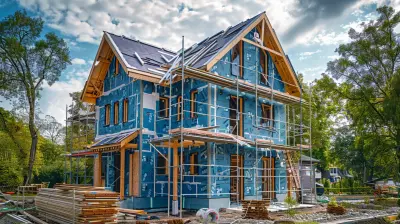
Renting vs Owning: How Homeownership Builds Equity Over Time
7 April 2026
If you've ever found yourself debating between renting and owning a home, you're not alone. This classic question has been on the minds of millions, especially as housing markets continue to fluctuate. Renting offers flexibility, while homeownership provides stability—but one of the biggest advantages of owning a home is the ability to build equity over time.
So, what exactly is home equity, and how does it grow? Let’s break it down in a way that makes sense, without all the complicated jargon.

What Is Home Equity?
Home equity is the value of your home that you actually own, not the bank. Think of it like a savings account that grows over time. When you buy a home, you typically take out a mortgage, and as you pay it down, your equity increases.For example, if you purchase a home for $300,000 and make a $60,000 down payment, your initial equity is $60,000. As you continue to make mortgage payments and your home appreciates in value, your equity grows.
How Homeownership Builds Equity
Unlike renting, where monthly payments simply go to a landlord, homeownership allows you to accumulate wealth over time. Here’s how:1. Mortgage Payments Increase Your Ownership
Each time you make a mortgage payment, a portion goes toward interest, and another portion goes toward paying down the loan balance (also known as the principal). Over time, as you pay down the principal, your ownership stake in the home grows.This process is similar to filling up a piggy bank little by little. While it might not seem like a lot at first, the more you pay, the more you own.
2. Home Appreciation Boosts Equity
One of the biggest advantages of owning a home is that it tends to appreciate in value over time. While real estate markets can be unpredictable, home values generally increase over the long term.For example, if you bought a home for $300,000 and, after ten years, its value rises to $400,000, you've gained $100,000 in equity just from appreciation alone.
Renters, on the other hand, don’t get to benefit from rising property values. Instead, they deal with increasing rent costs without any return on investment.
3. Making Extra Payments Speeds Up Equity Growth
If your budget allows, making extra payments on your mortgage can significantly speed up your equity growth. Even small additional payments toward your principal each month can save you thousands in interest over the life of the loan.Think of it like paying down a credit card—if you only make the minimum payments, you’ll be in debt longer. But if you make extra payments, you clear the balance faster.
4. Home Improvements Add Value
Renovations and home improvements can also increase your home’s equity. Upgrading your kitchen, adding a fresh coat of paint, or landscaping your yard can boost your home's value, giving you more equity in return.It’s similar to fixing up an old car—by investing in improvements, you enhance its worth.
The Downside of Renting: No Equity Growth
When you rent, your monthly payments go directly to your landlord. Unlike homeownership, where your money is building equity, renting provides no return on investment.Let’s say you pay $2,000 per month in rent for five years. That’s $120,000 you've spent without getting anything back. Meanwhile, a homeowner making similar monthly mortgage payments may have built significant equity during the same time.
Does this mean renting is always a bad idea? Not necessarily. If you move frequently for work, prefer fewer maintenance responsibilities, or aren’t financially ready for homeownership, renting might be the better option. However, long-term renters miss out on the wealth-building benefits of home equity.
Renting vs. Owning: Financial Comparison
Let’s look at a simplified comparison of renting versus owning a home over ten years:| Factor | Renting ($2,000/month) | Owning ($2,000/month mortgage) |
|------------------|----------------------|-----------------------------|
| Monthly Payment | $2,000 (goes to landlord) | $2,000 (toward mortgage) |
| Equity After 10 Years | $0 (money spent, no ownership) | ~$100,000+ (from payments & appreciation) |
| Flexibility | High (can move anytime) | Low (selling takes time) |
| Maintenance Costs | None (landlord handles) | Homeowner responsibility |
From a purely financial standpoint, homeownership tends to be the better option long-term, thanks to equity growth and appreciation.
The Psychological Benefits of Owning a Home
Besides financial advantages, owning a home can also provide emotional and psychological benefits.- Sense of Stability – Homeowners don’t have to worry about unexpected rent increases or lease terminations.
- Freedom to Customize – Unlike renters, homeowners can paint walls, remodel kitchens, and truly make their space their own.
- Community Belonging – Homeowners are more likely to establish roots in a neighborhood, fostering stronger connections with neighbors.
When Does Renting Make More Sense?
While homeownership is a great investment, renting can sometimes be the smarter choice. Situations where renting might be preferable include:- Short-Term Living Arrangements – If you plan to move within a few years, renting might be more practical.
- Limited Savings for a Down Payment – Homeownership requires upfront costs, including a down payment and closing costs.
- Unstable Income – If your income fluctuates significantly, renting offers more financial flexibility.
- No Maintenance Responsibilities – Renting allows you to avoid costly home repairs and maintenance.
So, Should You Rent or Buy?
The answer depends on your financial situation, lifestyle, and long-term goals. If you’re looking for stability and a way to build wealth, owning a home is a powerful tool. However, if flexibility and lower upfront costs are your priority, renting might be the right choice for now.Ultimately, homeownership is an investment in your future. The longer you own a home, the more equity you can build—turning your property into a financial asset rather than an ongoing expense.
Final Thoughts
Homeownership isn’t just about having a place to live; it’s about building long-term wealth through equity. While renting offers convenience, it doesn’t provide the financial benefits that come with owning real estate. If you're in a position to buy, homeownership can be one of the smartest financial moves you’ll ever make.Are you ready to start building equity with a home of your own? It might be time to take the leap and invest in your future.
all images in this post were generated using AI tools
Category:
Home EquityAuthor:

Basil Horne
Discussion
rate this article
2 comments
Azriel Pace
Homeownership offers a unique opportunity to build equity over time, unlike renting. By consistently making mortgage payments, homeowners invest in an asset that appreciates, ultimately providing financial stability and potential wealth for the future.
April 18, 2026 at 3:58 AM
Basil Horne
Thank you for highlighting the key benefits of homeownership! Building equity over time is indeed a significant advantage that can lead to long-term financial stability.
Lumen McEvoy
Equity growth benefits homeowners.
April 12, 2026 at 3:13 AM
Basil Horne
Absolutely! Homeownership allows homeowners to build equity over time as property values increase and mortgage payments reduce the principal.