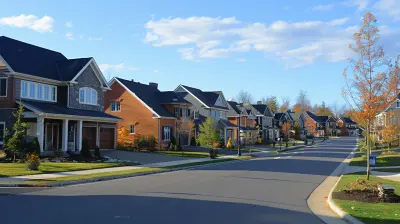
Preparing for the Spring 2027 Open House Season
17 September 2026
Spring 2027 might feel like a distant dot on the calendar, especially if you are reading this while scraping ice off your windshield or navigating the tail end of a sluggish market. But here is the reality that separates top-tier listing agents from the rest: the spring market does not begin when the tulips bloom. It begins the moment the previous autumn market cools off. If you wait until March 2027 to start preparing your listing, your neighbors who started in December will already have their pick of the buyers.
This guide is for sellers, agents, and homeowners who understand that a successful open house is not a single Sunday afternoon event. It is the culmination of months of strategic, sometimes tedious, and often invisible work. We are going to walk through the entire timeline, from the quiet winter prep to the post-open house follow-up, with a focus on what actually moves the needle in 2027.

Why Spring 2027 Will Be Different
Every spring market has its own personality. The spring of 2021 was a frenzy of bidding wars and waived inspections. The spring of 2023 was a correction, defined by higher rates and cautious buyers. Predicting the exact mood of spring 2027 is a fool's errand, but we can identify the structural forces that will shape it.First, consider the lock-in effect. Millions of homeowners refinanced at historically low rates between 2020 and 2022. As rates have shifted, many of those owners are reluctant to sell because doing so means trading a 3 percent mortgage for something significantly higher. This constrains inventory. In many markets, the spring 2027 open house season will not be a flood of listings. It will be a trickle. That is good news for sellers who do list, but only if their property is priced and presented correctly. A scarce inventory does not save an overpriced home.
Second, buyer demographics are shifting. The peak millennial cohort is now in its late 30s and early 40s, entering the family formation years. They are not browsing Zillow for fun. They are searching with specific criteria: school districts, commute times, home office space, and proximity to aging parents. They have been burned by high prices and bidding wars in previous years. They are informed, they are skeptical, and they will walk away from a home that feels like a trap.
Third, technology continues to reshape the open house. Virtual tours are no longer a novelty. They are a filter. By spring 2027, most serious buyers will have already taken a 3D walkthrough of your home before they ever step foot inside. The open house is not their first impression. It is their confirmation. That changes how you prepare.

The Six-Month Countdown: Starting in Late 2026
If you want to dominate the spring 2027 season, your preparation should begin in November or December of 2026. This is not about staging throw pillows. This is about addressing the expensive, unglamorous issues that kill deals during inspection.The Pre-Inspection Strategy
A common misconception is that you should wait for the buyer's inspector to find problems. That is reactive. The smarter play is to hire your own inspector in the winter of 2026. Yes, it costs a few hundred dollars. But it gives you a private, no-pressure list of defects.Why does this matter? Because in a competitive spring market, buyers are still skittish. A report that lists a "deferred maintenance" item like a cracked heat exchanger or a slow drain can send a buyer running, even if the price is right. By identifying these issues early, you can fix them on your timeline, with your preferred contractor, often at a lower cost than the rushed repairs that happen during a 10-day inspection contingency.
Consider a real-world example. A homeowner in a mid-Atlantic suburb discovered in January 2026 that their roof had a small leak near a chimney flashing. They fixed it for $600. Had they waited until the spring open house, a buyer's inspector would have flagged it. The buyer would have demanded a $3,000 credit or a full roof replacement. The $600 winter fix saved thousands.
The "Boring" Budget
Set aside a budget for what I call "boring" improvements. These are not the things that show up in glossy real estate magazines. They are the things that make a home feel safe and solid. Think: servicing the HVAC, cleaning the ducts, replacing old smoke detectors, re-caulking tubs and showers, and fixing squeaky doors.In 2027, buyers are more educated than ever about maintenance costs. A well-maintained home signals a responsible owner. A neglected home signals future headaches. The return on investment for these boring tasks is not measured in dollars. It is measured in the absence of objections.

The Three-Month Window: January to March 2027
By January, you should shift from repair mode to presentation mode. This is when you start thinking about the open house itself.Decluttering Is Not Organizing
There is a difference between organizing your clutter and removing it. Organizing means you bought a nice basket for your mail. Removing means the mail is gone. For the spring 2027 market, you need to remove at least 30 percent of your furniture and personal items.Why? Because buyers cannot visualize themselves in a home that is crowded with your life. They need to see the bones of the house. They need to see the flow from room to room. They need to imagine their own sofa against that wall.
A common mistake is to rent a storage unit for the last two weeks before the open house. That is too late. You should start decluttering in January. Live in the sparseness for a few months. It will force you to decide what you actually need. It will also make the final cleaning much easier.
The Lighting Audit
Spring 2027 open houses will be judged on light. Buyers crave brightness. They equate light with happiness and darkness with depression. Even if your home has great natural light, you need to audit your artificial lighting.Replace every burned-out bulb. Match the color temperature. If you have warm yellow bulbs in the kitchen and cool white bulbs in the living room, the house will feel disjointed. Stick to a consistent temperature, usually around 2700K to 3000K for a warm but clean look. Consider adding floor lamps in dark corners. A dark corner reads as a dead zone to a buyer.
The Curb Appeal Countdown
In most markets, spring 2027 will still have unpredictable weather. You cannot rely on planting flowers the week of the open house. You need a plan for curb appeal that works even if it snows in March.Focus on structure first. Clean the gutters. Power wash the siding and walkways. Trim the bushes. Edge the lawn. These are the things that make a home look cared for. Then, add seasonal color. Potted plants near the front door are better than flower beds because you can swap them out if the weather turns. A simple evergreen wreath on the door works in January and April.

The One-Month Sprint: March 2027
March is when the market starts to wake up. This is the time for photography, pricing, and marketing strategy.Pricing for the Spring 2027 Buyer
The biggest mistake sellers make is pricing based on last year's comps. In a shifting market, last year's comps are a history lesson, not a prediction. You need to look at what is happening right now.In spring 2027, I expect buyers to be payment-sensitive. They are not just looking at the price of the home. They are looking at the monthly payment. A $10,000 price reduction means very little if the interest rate is high. But a seller-paid rate buy-down can change the entire equation.
Consider this trade-off. You can list your home at $650,000 and hope for a bidding war. Or you can list at $625,000 and offer a 2-1 rate buy-down. The lower price attracts more traffic. The buy-down makes the monthly payment affordable. In many cases, the lower price with the buy-down nets the seller more money because it creates competition.
Talk to your agent about seller concessions. In 2027, concessions are not a sign of weakness. They are a strategic tool.
The Photography and Video Standard
By spring 2027, a slideshow of still photos is not enough. You need a 3D tour, a floor plan, and a drone video if the property allows. Why? Because buyers are filtering online. If they cannot walk through the home virtually, they will scroll past.Hire a professional. Do not use your phone. The difference in quality is not just aesthetic. It is psychological. Professional photos signal that the seller is serious. Amateur photos signal that the seller is casual. In a competitive market, casual sellers get lower offers.
The Open House Schedule
When should you hold the open house? The traditional answer is Sunday afternoon. But in 2027, you might want to consider a Saturday morning or a weekday evening.Why? Because the traditional Sunday open house is crowded with neighbors and tire-kickers. A Saturday morning open house catches serious buyers who are out running errands. A Thursday evening open house catches commuters who want to see the home after work. You can do both. But you should not do just one.
The key is to create a sense of urgency. A single open house is an event. Multiple open houses are a routine. You want buyers to feel like they might miss out. So, hold one or two well-publicized open houses, and then require appointments for the rest of the week.
The Two-Week Blitz: Marketing and Outreach
Two weeks before the open house, your marketing should be in full swing. This is not the time to be shy.The Neighborhood Preview
One of the most effective strategies for spring 2027 is the neighborhood preview. Before the public open house, invite your immediate neighbors to a private showing. Why? Because neighbors talk. They have friends and family who want to move into the area. If they love your home, they will sell it for you.Serve coffee and pastries. Keep it low-key. Give them a flyer with the listing details. Ask them to share it with anyone they know who is looking. This costs almost nothing and can generate a buyer before the sign goes up.
The Broker's Open
Real estate agents are busy. They will not show your home if they do not know about it. A broker's open is a chance to get them inside. But you need to make it worth their time.In 2027, consider a themed broker's open. Maybe it is a taco bar. Maybe it is a wine tasting. The theme does not matter as much as the invitation. Make it personal. Call the top agents in your area and invite them directly. If they have a buyer who is looking for a home like yours, they will remember the one with the good food and the easy parking.
The Digital Push
Your online listing should be live at least 10 days before the open house. This gives buyers time to find it, save it, and schedule a showing. If you list it on Friday and hold the open house on Sunday, you are missing the buyers who plan their weekends on Wednesday.Use social media. But do not just post the listing link. Post a story. Show the morning light in the kitchen. Show the quiet corner of the backyard. Show the storage in the garage. Give people a reason to care.
The Day of the Open House: Execution
The day of the open house is not the time to relax. It is the time to execute.The Sensory Experience
Buyers buy with their senses. They buy with their eyes, their nose, and their feet. You need to manage all three.Sight: Turn on every light. Open every curtain. Remove every personal photo. You want the buyer to see the home, not your family.
Smell: Do not bake cookies. That is a cliché. In 2027, buyers are suspicious of smells that cover up problems. Instead, aim for neutral. Air out the home. Use a mild, unscented cleaner. If you must use a scent, use something subtle like cedar or citrus. Never use heavy floral scents. They trigger allergies and headaches.
Sound: Turn off the TV. Play soft, instrumental music at a low volume. The goal is to avoid silence, not to create a concert.
Touch: Make sure every surface is clean. Buyers will touch the countertops, the railings, and the light switches. A sticky light switch is a small thing that creates a big negative impression.
The Agent's Role
If you are a seller, leave the home. Do not hover. Do not follow buyers around. Do not answer questions. You hired an agent for a reason. Let them do their job.If you are an agent, your job is to engage, not to sell. Ask open-ended questions. "What do you think of the kitchen?" is better than "Isn't the kitchen beautiful?" Listen more than you talk. You are gathering intelligence. You want to know what the buyer loves and what they hate. That information is gold for the negotiation.
The Sign-In Sheet
Do not rely on a paper sign-in sheet. In 2027, use a digital sign-in. A QR code that leads to a simple form is faster and more accurate. It also allows you to follow up with a text message or email the next day. But do not make it mandatory. Some buyers will refuse to sign in. Let them in anyway. A buyer who refuses to sign in is still a buyer.After the Open House: The Follow-Up
The open house is over. The house is clean. You are tired. But the work is not done. The follow-up is where deals are made.The 24-Hour Rule
Within 24 hours, every person who signed in should receive a personal message. Not a generic blast email. A personal message. "Hi John, thanks for coming by 123 Main Street. I noticed you spent a lot of time in the backyard. Let me know if you have any questions about the landscaping."This does two things. It shows you are attentive. It opens a conversation. Many buyers will not respond. That is fine. But the ones who do are your hottest leads.
The Feedback Loop
Call the agents who showed the home. Ask for honest feedback. What did their buyers say? Was the price an issue? Was the layout a problem? Was the condition a concern?Do not get defensive. This is data. If three different buyers say the same thing, it is not a coincidence. It is a pattern. You need to address it. Maybe you need to lower the price. Maybe you need to paint the dark hallway. Maybe you need to replace the old carpet. The feedback tells you where to invest your next dollar.
The Second Open House
If you do not get an offer within a week, do not panic. But do not do nothing. Consider a second open house. But change something. If you had a Saturday morning open house, try a Sunday afternoon. If you served coffee, serve wine. If you were at $650,000, drop to $639,000.The spring 2027 market will reward sellers who are flexible. The buyers are out there. They are just looking for a reason to say yes. Your job is to remove every reason to say no.
Common Mistakes to Avoid in Spring 2027
Let's talk about what not to do.First, do not over-improve. You do not need a new kitchen to sell a home in 2027. You need a clean kitchen. The return on investment for a major renovation is rarely 100 percent. You are better off pricing the home correctly and letting the buyer customize.
Second, do not ignore the inspection. If your pre-inspection found issues, fix them. Do not disclose them and hope the buyer overlooks them. In 2027, buyers are not overlooking anything. They are using inspections as negotiation tools. If you disclose a problem, you own it. If you fix it, you neutralize it.
Third, do not be greedy. The spring market is not a lottery. It is a marketplace. If you get a fair offer, take it. The buyer who offers $10,000 below asking on the first day might be the only buyer who offers at all. A bird in the hand is worth two in the bush. This is especially true in a market with uncertain interest rates.
Fourth, do not neglect the exterior. In spring 2027, buyers will spend more time outside. They will walk the property. They will look at the fence. They will check the gutters. They will sit on the porch. Make sure the outside is as inviting as the inside.
Final Thoughts: The Long Game
Preparing for the spring 2027 open house season is not about a single weekend. It is about a mindset. It is about treating your home like a product and your buyer like a guest. It is about doing the boring work in the winter so you can reap the rewards in the spring.The market will have its ups and downs. Interest rates will fluctuate. Inventory will shift. But one thing will never change. A well-prepared home, priced correctly and presented beautifully, will always sell. The sellers who start now will be the ones who close in April. The sellers who wait will be the ones who chase the market in June.
So, start today. Make a list. Fix the small things. Declutter the big things. Talk to your agent. Build your team. Spring 2027 is coming. Be ready.
all images in this post were generated using AI tools
Category:
Open HousesAuthor:

Basil Horne